
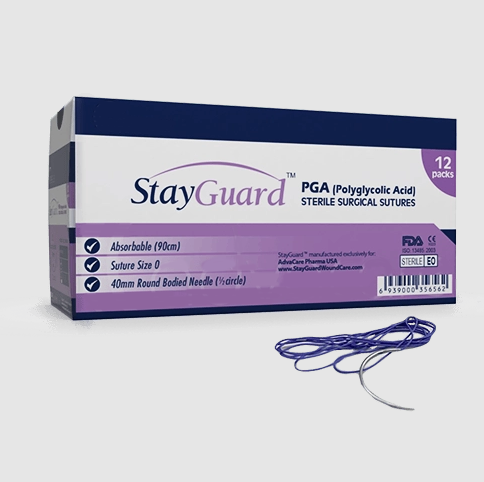
Absorbable Sutures
Free shipping on orders over $5500!
- Satisfaction Guaranteed
- No Hassle Refunds
- Secure Payments
Description
What are Absorbable Sutures?
- Wound Closure
- Hospital Supplies,
- Surgical Instruments
Absorbable Sutures are surgical threads that are naturally broken down and absorbed by the body over time. Dissolvable sutures have various types and lengths. These are commonly used in surgeries to close incisions or wounds, eliminating the need for suture removal and reducing the risk of infection or irritation.
Absorbable sutures come in different types, such as synthetic and natural. Synthetic absorbable sutures are made from materials like polyglycolic acid (PGA), polydioxanone (PDO), or PGLA, which is combination of copolymer of Poly-Glycolic Acid (PGA) and Poly-Lactic Acid (PLA). These materials are broken down by the body’s natural processes and are commonly used in internal surgical procedures, such as gastrointestinal or gynecological surgeries. Natural absorbable sutures, on the other hand, are typically made from materials like catgut or collagen derived from animal sources. They are commonly used in procedures where a shorter-term absorption is desired, such as in superficial skin closures or oral surgeries.
The choice of absorbable sutures, such as Polyglactin 910 (Vicryl™), depends on various factors, including the type and location of the surgical procedure, the tension on the wound, and the expected healing time. For example, PGA sutures are known for their strength and are often used in procedures where long-term wound support is needed. PLA sutures have a slower absorption rate, making them suitable for procedures with a longer healing time. PDO sutures offer good tensile strength and are commonly used in plastic surgery or cosmetic procedures.
It’s important to note that the absorption rate of these sutures can vary depending on factors such as the patient’s individual healing response, the suture size, and the specific type of suture used. The surgeon will consider these factors when selecting the appropriate absorbable suture for each surgical case.

Reviews
There are no reviews yet.